Ongoing international interest in Phuket real estate is rising, fuelled by the appealing lifestyle, rental revenue potential, and Thailand’s welcoming environment. A frequent query from overseas purchasers is:
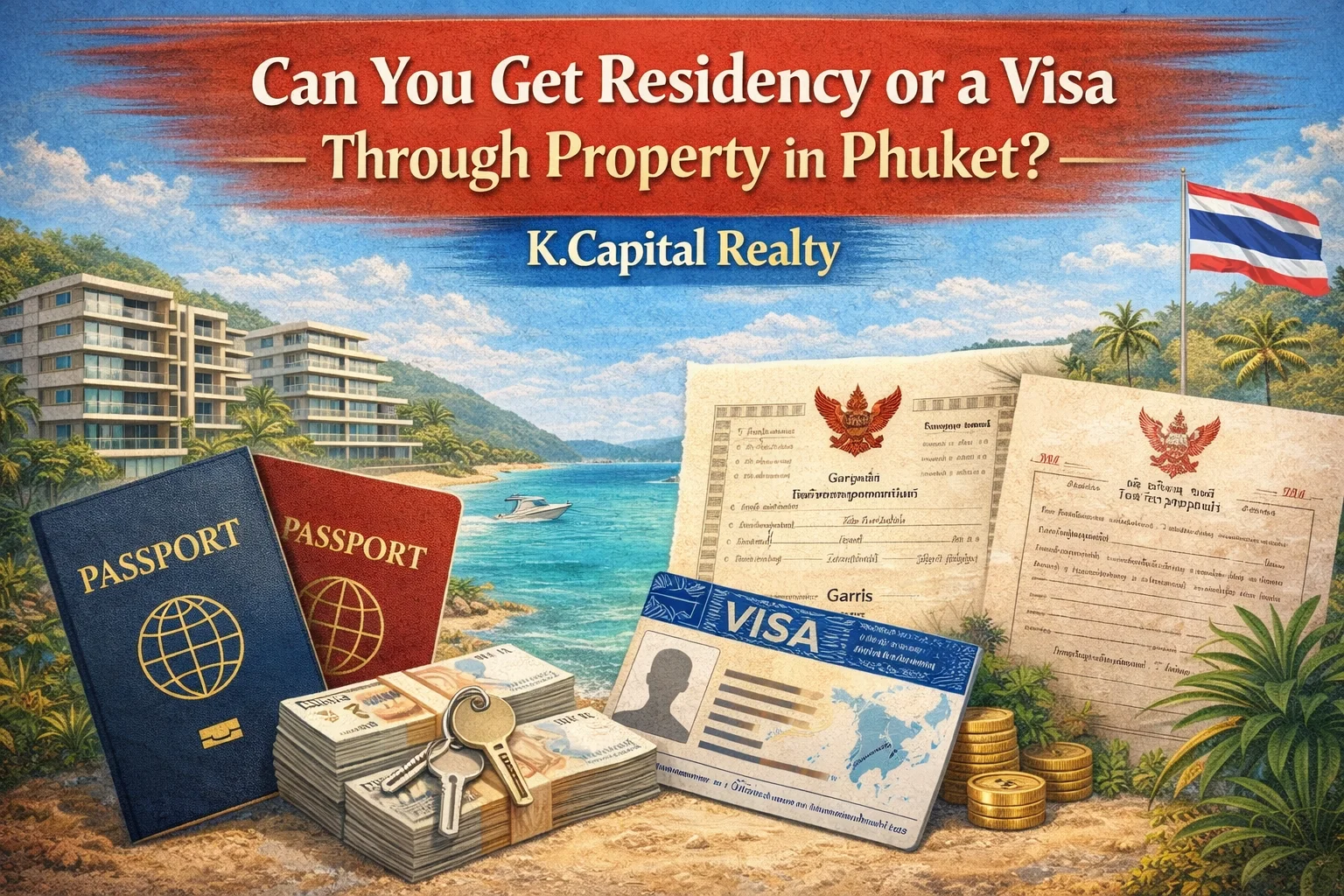
Does acquiring property in Phuket lead to residency or a lengthy stay permit in Thailand?
The quick response is negative; simply owning a property does not confer residency or a visa. Nevertheless, holding a Phuket real estate agency can bolster certain visa submissions, contingent upon the visa category, investment scale, and individual situation.
This piece clarifies the actual dynamic between Thai property ownership and visas, outlines available avenues, and sets realistic expectations for foreign purchasers.
Does Phuket Property Acquisition Grant Thai Residency?
Contrary to popular assumption, Thailand does not offer automatic residency or nationality via real estate investment. Unlike nations with “golden visa” schemes, Thailand keeps property rights separate from immigration status.
Non-citizens are permitted to acquire:
• Condominium units within the foreign freehold allowance
• Leasehold apartments or villas
• Property via Thai corporate structures (subject to constraints)
However, none of these methods of holding title automatically secures a Thai visa or permanent residency status.
Crucial point:
Phuket real estate ownership is not a visa substitute, but it can be an asset when seeking certain extended-stay visas.
Thai Visa Pathways for Phuket Property Holders
While property purchase doesn’t bestow residency, several Thai visa types are often utilized by those owning Phuket real estate agent. The appropriate visa choice hinges on age, earnings, business engagement, and intended duration of stay.
Retirement Authorization (Non-Immigrant O-A or O)
The Thailand Retirement Visa stands as a favoured choice among foreign property owners in Phuket.
Prerequisites for qualification involve:
• Attaining age 50 or above
• Financial substantiation:
• Possessing THB 800,000 in a local Thai bank, or
• A monthly income of no less than THB 65,000
How property ownership assists:
• Confirms proof of fixed address
• Indicates a long-term intention to reside in the nation
• Beneficial for local immigration documentation
Crucial advisory:
Property ownership is not required for eligibility, yet holding a Phuket apartment or villa often streamlines the application procedure.
Thailand Elite Permit and Real Estate Ownership
The Thailand Elite Permit is a long-term, residency-like authorization favoured by affluent individuals and lifestyle buyers in Phuket.
Principal attributes:
• Duration spanning 5 to 20 years
• No age mandates
• No stipulations regarding income or employment
• Membership outlay commencing at THB 600,000+
Connection to property:
• No real estate purchase is a prerequisite
• Many Elite Permit holders acquire Phuket villas or condos for personal enjoyment
• Frequently paired with ownership of high-end residences
Ideal for:
• Financiers
• Remote workers
• Extended-stay lifestyle purchasers
Long-Term Resident (LTR) Permit and Property Investment
Thailand introduced the Long-Term Resident (LTR) Permit to attract high-value expatriates.
Eligible profiles comprise:
• Affluent global citizens
• Wealthy seniors
• Telecommuting professionals
• Highly skilled specialists
Real estate investment mandates:
• A minimal property outlay of USD 500,000
• The property must be:
• A recently built condominium or
• A freehold unit sourced from recognized developers
Advantages:
• Ten-year extendable permit
• Work authorization privileges
• Tax benefits (for select profiles)
Key clarification:
The permit is not granted automatically; property investment serves merely as one qualifying element.
Business Permit (Non-Immigrant B) and Property Holders
Some non-citizens mistakenly believe property ownership grants access to a Thai business permit. This is a frequent misapprehension.
The facts are:
• A Business Permit necessitates:
• Endorsement by a Thai corporation
• Gainful employment or commercial operation
• Property ownership alone does not suffice
However:
• Specific property buyers establish legitimate Thai entities (with expert legal counsel)
• Corporate ownership must adhere to Thai statutes
• Misusing nominee arrangements carries significant legal hazards
Achieving Thai Permanent Residency via Real Estate
Permanent Residency (PR) in Thailand is highly restricted and not directly linked to real estate holdings.
Essential information:
• PR allocations are subject to annual caps
• Requires:
• A minimum of 3 continuous years on an eligible permit
• Robust financial and tax documentation
• Demonstrations of Thai language skills and integration
Property ownership’s role:
• Can bolster stability and long-term intent
• Offers no assurance of success
Can Purchasing Property Lead to Thai Nationality?
No. Thai citizenship cannot be attained through real estate investment.
Nationality typically necessitates:
• Permanent resident status
• Extended professional engagement
• Fluency in the Thai language
• Thorough background vetting
Possessing property provides no direct route to Thai citizenship.
Common Misconceptions Regarding Phuket Property and Permits
Misconception 1: Buying a villa secures residency
Inaccurate. Villas are usually leasehold and irrelevant to immigration status.
Misconception 2: Substantial outlays guarantee a permit
Inaccurate. Even high-value acquisitions must meet permit criteria.
Misconception 3: Condominiums automatically qualify for long-stay permits
Inaccurate. Condos can assist applications, but do not override permit prerequisites.
Optimal Approach: Property Acquisition + Suitable Permit Planning
Successful extended stays in Phuket generally involve:
1. Determining the appropriate permit first
2. Acquiring property aligned with lifestyle or investment objectives
3. Engaging licensed legal and immigration specialists
Recommended course of action:
• Consult an immigration advisor before securing property
• Synchronize property investment with permit eligibility
• Refrain from buying real estate solely to address permit needs
Concluding Remarks: The Reality of Phuket Property and Residency
While buying property in Phuket does not automatically confer residency or a visa, it can serve a supportive function in several extended-stay schemes. Grasping the legal distinction between property statutes and immigration regulations is vital for overseas purchasers.
Phuket remains an excellent locale for:
• Retirees
• Long-term lifestyle inhabitants
• Investors with sound permit strategy
The key elements are knowledgeable decision-making, practical expectations, and professional direction.