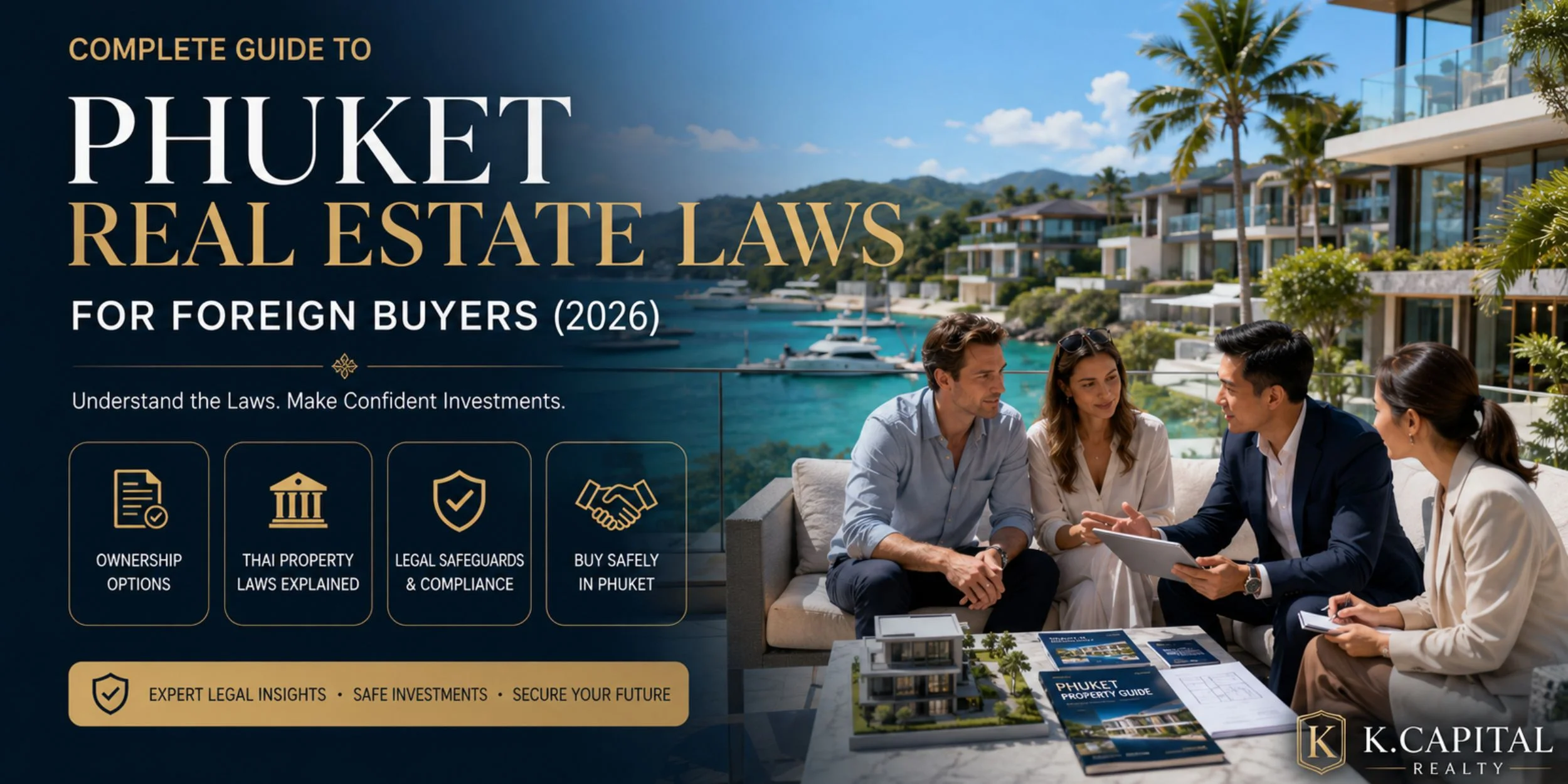
Phuket has become one of Asia’s most attractive destinations for international property buyers. With luxury beachfront villas, modern condominiums, strong rental demand, and a growing tourism economy, the island continues to attract investors from Europe, the UK, the United States, Australia, Switzerland, Singapore, and Russia.
However, understanding Phuket real estate laws is essential before making a purchase. Thailand has specific regulations regarding foreign property ownership, and buyers who understand these rules can invest safely and confidently.
This Phuket real estate guide explains the legal structures available to foreign buyers, the difference between leasehold and freehold Thailand ownership, taxes and fees, and the most important legal checks before signing a contract.
Can Foreigners Legally Buy Property in Phuket?
One of the most common questions international investors ask is: can foreigners buy property in Thailand?
The answer is yes — but with restrictions.
Foreigners can legally own condominium units in Thailand under freehold ownership, provided the building complies with Thailand’s foreign ownership quota regulations. However, foreigners generally cannot directly own land in Thailand.
This distinction is important because condominiums and villas are treated differently under Thailand property laws for foreigners.
In Phuket, most foreign buyers choose one of these ownership structures:
- Freehold condominium ownership
- Leasehold villa ownership
- Thai company ownership structures (used carefully and legally)
- Long-term land leases
Each structure has different legal implications, costs, and levels of security.
Understanding Freehold and Leasehold Ownership
When buying property in Phuket, understanding leasehold vs freehold Thailand ownership is crucial.
Freehold Ownership
Freehold gives the buyer full ownership rights over the property indefinitely. Foreigners can legally own condominium units’ freehold in Thailand if foreign ownership in the building does not exceed 49% of the total unit area.
Benefits of freehold ownership include:
- Full ownership rights
- Easier resale process
- Stronger long-term security
- Better financing and inheritance options
Freehold condos are especially popular among international investors seeking long-term Phuket property investment opportunities.
Leasehold Ownership
Leasehold allows foreigners to lease land or property for a fixed period. In Thailand, standard lease terms are usually 30 years, with optional renewal clauses.
Leasehold is commonly used for:
- Villas in Phuket
- Land plots
- Some resort residences
Although leasehold does not provide direct land ownership, properly drafted contracts can still offer strong legal protection.
Many luxury villa developments in Phuket are sold under leasehold structures specifically designed for foreign buyers.
Condominium Ownership Laws for Foreign Buyers
Phuket condo ownership remains the simplest and safest route for many overseas buyers.
Under the Thailand Condominium Act:
- Foreigners may own up to 49% of the saleable area in a condominium project
- Funds used for purchase must usually be transferred from overseas in foreign currency
- Buyers receive freehold ownership registered at the Land Office
The transfer process requires documentation proving that foreign funds entered Thailand correctly. Banks issue a foreign exchange transaction form for qualifying transfers.
Popular areas for condo investment in Phuket include:
- Bang Tao
- Surin
- Kamala
- Rawai
- Patong
- Kata and Karon
Condominiums are often preferred because they offer lower maintenance responsibilities, strong rental demand, and simpler legal ownership compared to villas.
Can Foreigners Own Land in Thailand?
Under current foreign property ownership Thailand regulations, foreigners generally cannot directly own land in Thailand.
However, there are legal alternatives commonly used in Phuket property investment:
Long-Term Lease Agreements
Foreigners may lease land for up to 30 years, with possible renewal clauses. This remains one of the safest and most common methods for villa ownership.
Thai Limited Company
Some buyers establish a Thai company to purchase land. However, authorities closely monitor these structures, and nominee arrangements are illegal.
A properly structured company must operate legitimately and comply with Thai corporate regulations.
BOI and Investment Exceptions
In rare cases, large investors approved by Thailand’s Board of Investment may obtain land ownership rights under special investment programs.
For most international buyers, leasehold structures remain the most practical option.
Buying Villas in Phuket as a Foreigner
Buying villas in Phuket requires more legal planning than purchasing condominiums.
Typically, the villa building itself may be owned separately from the land underneath it. The land is usually leased through a registered lease agreement.
Before purchasing a villa, buyers should carefully review:
- Land title deeds
- Building permits
- Environmental regulations
- Zoning restrictions
- Lease renewal clauses
- Shared estate management agreements
Certain hillside and beachfront areas in Phuket have strict development controls. Working with experienced legal advisors and a reputable real estate agency is essential.
Luxury villa markets in Phuket continue to perform strongly due to limited prime land availability and growing demand for lifestyle investments.
Legal Due Diligence Before Buying Property
Due diligence is one of the most important parts of buying property in Phuket.
Before signing any reservation agreement or sales contract, buyers should verify:
- Legal ownership of the seller
- Chanote land title validity
- Building permits
- Mortgage or debt obligations
- Environmental compliance
- Access roads and infrastructure rights
- Foreign ownership quota availability for condos
A qualified Thai property lawyer should independently review all contracts and title documents. This process protects buyers from hidden legal risks and ensures the property can legally be transferred.
Taxes and Fees Foreign Buyers Should Know
Foreign buyers should budget for additional taxes and government fees when purchasing Phuket real estate agency.
Common costs include:
- Transfer fee
- Stamp duty
- Withholding tax
- Specific business tax
- Legal fees
- Lease registration fees (for leasehold properties)
For condominiums, annual common area maintenance fees also apply.
Thailand property investment laws may change over time, so buyers should always confirm the latest rates with legal professionals before completing a transaction.
Common Legal Mistakes to Avoid
Many foreign buyers encounter problems because they rush the process or rely on informal advice.
Common mistakes include:
- Purchasing property without legal due diligence
- Using illegal nominee company structures
- Not verifying land titles
- Signing contracts without translation
- Ignoring foreign ownership quotas
- Assuming verbal promises are legally binding
- Choosing developers without proven track records
Working with experienced Phuket property professionals significantly reduces these risks.
Why Phuket Remains a Safe Property Investment Destination?
Despite ownership restrictions, Phuket remains one of Southeast Asia’s strongest lifestyle and investment markets.
Several factors continue to support long-term growth:
- International tourism recovery
- Expanding luxury property market
- Limited beachfront supply
- Strong rental yields in prime areas
- Modern infrastructure development
- High demand from international buyers
Thailand’s property laws are well established, and when buyers follow proper legal procedures, ownership structures can provide strong long-term security.
Phuket also offers attractive lifestyle advantages including international schools, private hospitals, marinas, golf courses, and year-round tourism appeal.
Why Work With K.Capital Realty?
Navigating Thailand property laws for foreigners requires local expertise, market knowledge, and reliable legal guidance.
K.Capital Realty helps international buyers confidently purchase condos and villas in Phuket by providing:
- Professional property sourcing
- Legal coordination
- Developer background checks
- Investment consultation
- Market insights
- Negotiation support
- End-to-end purchase assistance
Whether you are searching for a beachfront villa, investment condo, retirement property, or holiday home, K.Capital Realty ensures a smooth and transparent buying experience.
Final Thoughts
Understanding Phuket real estate laws is the key to making a safe and successful investment in Thailand.
Foreigners can legally own condominiums freehold, while villas are typically purchased through secure leasehold structures. With proper due diligence, experienced legal support, and trusted real estate guidance, buying property in Phuket can be both rewarding and secure.
As Phuket continues to attract global investors and lifestyle buyers, the island remains one of Asia’s most desirable property destinations in 2026.
FAQ: Phuket Real Estate Laws for Foreign Buyers
Can foreigners buy property in Phuket legally?
Yes. Foreigners can legally buy condominium units freehold in Thailand and may lease land or villas through long-term lease agreements.
What is the safest way to buy property in Thailand?
The safest approach is to work with a reputable real estate agency, hire an independent Thai property lawyer, and conduct full legal due diligence before signing contracts.
Can foreigners own land in Thailand?
Generally, foreigners cannot directly own land in Thailand. Most villa purchases use leasehold structures or legally compliant company arrangements.
What is the difference between leasehold and freehold in Thailand?
Freehold gives permanent ownership rights, while leasehold provides the right to use property or land for a fixed lease term, commonly 30 years.
Is Phuket condo ownership secure for foreigners?
Yes. Freehold condominium ownership is protected under Thai law, provided the project remains within the foreign ownership quota.
What taxes do foreign buyers pay in Thailand?
Foreign buyers may pay transfer fees, stamp duty, withholding tax, legal fees, and lease registration fees depending on the ownership structure.
Are villas in Phuket a good investment?
Luxury villas in Phuket remain attractive due to strong tourism demand, limited prime land supply, and increasing international buyer interest.
Ready to Buy Property in Phuket?
Whether you are looking for a luxury villa, investment condo, retirement residence, or holiday home, K.Capital Realty can help you navigate every step of the buying process with confidence.
Contact K.Capital Realty today to explore the best Phuket property investment opportunities and receive expert guidance tailored to foreign buyers.