
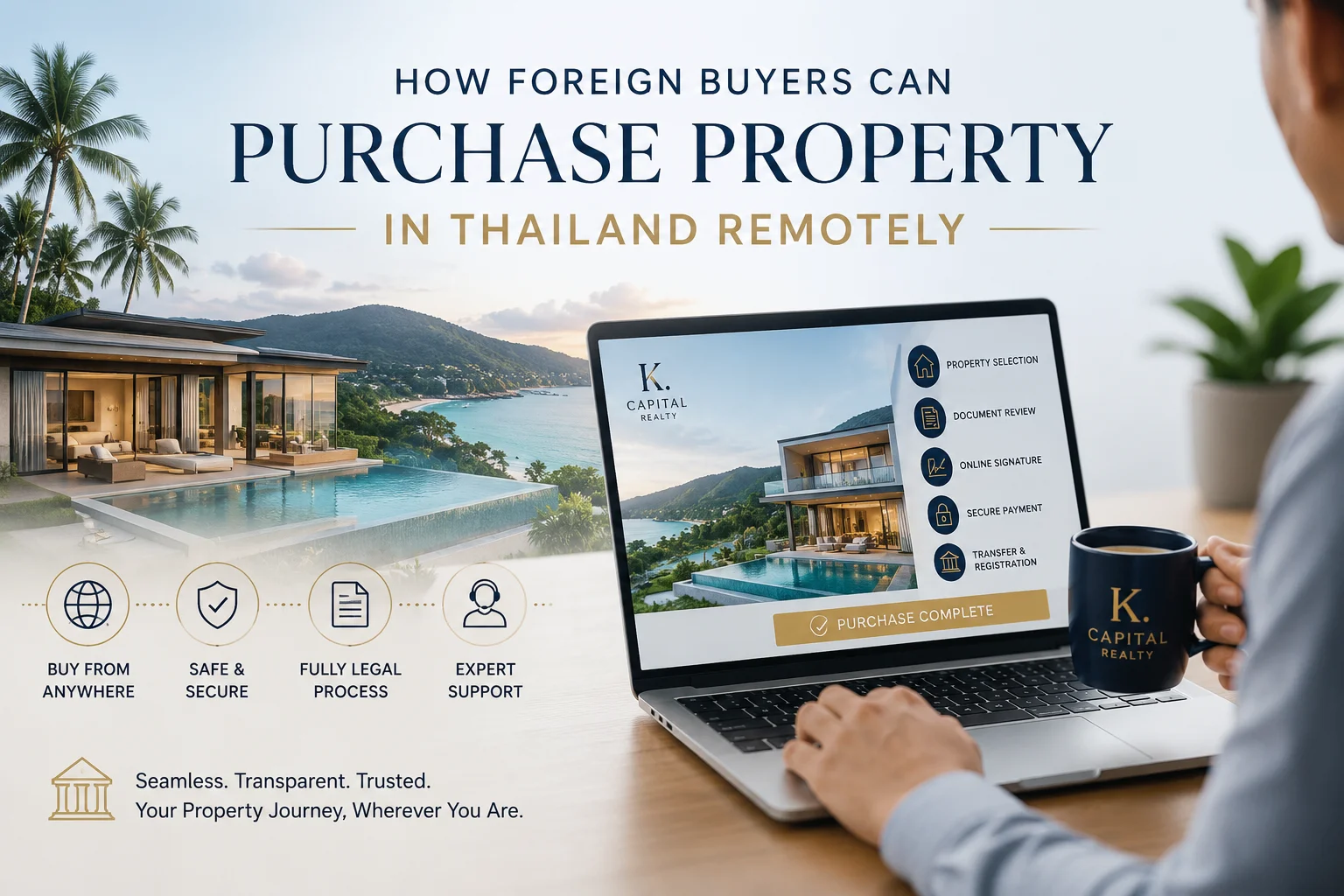
The way international buyers invest in real estate has changed dramatically over the past decade. Today, it is entirely possible to purchase property in Thailand remotely without boarding a plane or spending weeks navigating unfamiliar legal processes in person. Advances in digital communication, virtual property tours, electronic documentation, and international banking systems have made overseas property transactions more accessible than ever before.
Thailand continues to attract foreign investors, retirees, digital nomads, second-home buyers, and lifestyle purchasers from around the world. The country’s attractive climate, established tourism industry, modern infrastructure, comparatively affordable property options, and strong lifestyle appeal make it one of Southeast Asia’s most sought-after real estate destinations.
This guide explains how foreign buyers can safely purchase property in Thailand remotely, what legal considerations apply, what documentation is required, how funds are transferred, and how to reduce risk throughout the transaction.
Can Foreigners Legally Buy Property in Thailand?
One of the first questions international buyers ask is whether foreigners are legally allowed to own property in Thailand. The answer depends on the type of property being purchased.
Condominium Ownership Rules
Condominiums remain the most straightforward ownership option for many foreign buyers.
Under Thailand’s Condominium Act, foreign buyers can legally own condominium units outright, provided foreign ownership within the building remains within the applicable quota limits.
This structure provides direct ownership rights and remains one of the most popular choices for international investors.
Leasehold Options
Leasehold arrangements are commonly used throughout Thailand’s property market. Under a leasehold structure, a buyer obtains contractual rights to use and occupy a property for a specified period rather than owning the land directly.
Leasehold arrangements are particularly common for villas and certain resort developments.
Property Ownership Through Thai Companies
Some buyers explore company-related ownership structures depending on their circumstances and intended property use.
These arrangements involve legal and tax considerations and should always be reviewed by qualified legal professionals.
Land Ownership Restrictions
Foreign individuals generally cannot directly own land in Thailand. This is one of the most important distinctions international buyers must understand before beginning their property search.
Importance of Legal Guidance
Thailand’s property laws are well established, but ownership structures vary significantly depending on the property type. Every buyer should obtain independent legal advice before proceeding with any transaction.
Why More Foreign Buyers Are Choosing to Purchase Property in Thailand Remotely
The ability to purchase property in Thailand remotely has become increasingly attractive for several reasons.
Convenience
Buyers can research properties, attend virtual viewings, review documentation, and communicate with professionals from anywhere in the world.
Global Property Investment Trends
Remote real estate transactions have become increasingly common as investors diversify internationally. Many buyers now view overseas property ownership as part of broader wealth preservation and portfolio diversification strategies.
Digital Property Transactions
Technology has transformed how properties are marketed and sold. Buyers now have access to:
- Virtual tours
- Interactive floor plans
- Live video inspections
- Digital document sharing
- Online consultations
Time and Travel Cost Savings
Remote transactions reduce the need for multiple international trips during the research and purchasing process.
Increased Transparency Through Technology
Modern buyers often have access to more information than ever before, including property specifications, market reports, development histories, and neighborhood analysis.
Step-by-Step Process to Purchase Property in Thailand Remotely
Define Your Investment Goals
Before viewing properties, determine why you are purchasing. Common objectives include:
- Investment income
- Retirement planning
- Vacation home ownership
- Relocation
- Wealth diversification
Clear objectives help narrow suitable options.
Choose a Trusted Real Estate Agency
Working with experienced local professionals can significantly simplify the process.
Look for:
- Market knowledge
- Transparent communication
- Verified listings
- Experience assisting foreign buyers
Explore Properties Through Virtual Tours
Most reputable agencies now provide:
- Video walkthroughs
- Live property tours
- Floor plans
- Drone footage
- Neighborhood overviews
Virtual tours help buyers evaluate properties before committing further resources.
Request Detailed Property Documentation
Ask for:
- Ownership documents
- Floor plans
- Property specifications
- Maintenance information
- Development details
A professional seller or agency should be able to provide comprehensive documentation.
Conduct Due Diligence
This stage is critical. Due diligence may include:
- Title deed verification
- Ownership confirmation
- Legal review
- Developer checks
- Property inspections
Never skip this step.
Reserve the Property
Many transactions involve a reservation agreement and deposit. Before paying any deposit, ensure terms and conditions are clearly understood.
Review Contracts Carefully
Independent legal review helps ensure contractual obligations and ownership structures are understood before signing.
Transfer Funds Securely
International property transactions typically involve regulated banking procedures and supporting documentation. Always verify payment instructions directly through trusted channels.
Complete Ownership Registration
Ownership registration occurs through the appropriate legal process depending on the property type and ownership structure.
Receive Final Documents
Following completion, buyers should receive documentation confirming ownership and transaction completion. Maintain these records carefully.
How to Verify a Property Without Visiting Thailand
Remote purchases require thorough verification procedures.
Title Deed Verification
Ownership records should be independently confirmed through appropriate legal channels.
Developer Background Checks
For new developments, investigate:
- Company history
- Previous projects
- Completion record
- Market reputation
Property Inspection Reports
Professional inspections can identify issues not visible during virtual tours.
Legal Reviews
Independent legal professionals should review ownership documents and contracts.
Independent Due Diligence
Verification should never rely solely on marketing materials. Independent investigations help protect buyers.
Understanding Foreign Currency Transfers and Payment Procedures
International payments methods to buying property in Thailand are a key component of remote property purchases.
International Wire Transfers
Most transactions involve regulated bank transfers.
Bank Requirements
Banks may request supporting documentation regarding the transaction and source of funds.
Foreign Exchange Transaction Forms
Certain property ownership structures require documentation demonstrating that purchase funds originated from outside Thailand.
Compliance Considerations
International financial regulations require proper documentation and recordkeeping.
Record Keeping
Maintain copies of:
- Transfer receipts
- Banking confirmations
- Contracts
- Legal correspondence
These records may be needed in the future.
Common Risks When Buying Thai Property Remotely and How to Avoid Them
Fraudulent Listings
Avoid listings that lack documentation or appear unusually attractive without supporting information.
Incomplete Legal Checks
Always conduct independent legal reviews.
Misleading Property Information
Virtual tours should be supplemented by documentation and professional verification.
Hidden Costs
Understand all expenses before committing.
Potential costs include:
- Transfer fees
- Legal fees
- Maintenance charges
- Property management fees
Unlicensed Agents
Work with reputable professionals who demonstrate local market expertise and transparency.
Prevention Tips
- Verify ownership
- Conduct due diligence
- Use qualified legal advisors
- Request documentation
- Confirm payment details independently
Why International Buyers Trust K.Capital Realty
Purchasing property from abroad requires confidence in the professionals assisting you.
At K.Capital Realty, we understand the concerns overseas buyers face when evaluating properties remotely.
Our approach focuses on:
Professional Guidance
Providing practical information that helps buyers make informed decisions.
Transparency
Clear communication and realistic expectations throughout the process.
Personalized Support
Every buyer’s objectives, budget, and circumstances are different.
Local Market Expertise
Deep knowledge of Thailand’s property market, particularly Phuket and key investment locations.
Commitment to Buyer Protection
We encourage proper due diligence, independent legal advice, and careful property evaluation before any commitment is made.
For personalized assistance and guidance on remote property purchases in Thailand, contact:
Phone: +66 63 583 4250
Benefits of Working With a Local Thailand Property Expert
Local expertise can make a substantial difference.
Market Knowledge
Local professionals understand:
- Neighborhood trends
- Pricing dynamics
- Investment considerations
Negotiation Support
Experienced advisors help buyers navigate negotiations and evaluate pricing.
Due Diligence Assistance
Professionals can coordinate inspections, documentation reviews, and verification procedures.
Legal Coordination
Local experts often assist in coordinating communication between buyers, lawyers, developers, and sellers.
Ongoing Support
Many buyers benefit from assistance even after completing the purchase.
This may include referrals for:
- Property management
- Maintenance services
- Rental management
K.Capital Realty regularly assists overseas buyers throughout the property acquisition process.
Frequently Asked Questions
Can foreigners buy property in Thailand without visiting?
Yes. Many foreign buyers complete substantial portions of the process remotely using virtual viewings, legal representation, and digital communication.
Is it safe to purchase property in Thailand remotely?
It can be safe when proper due diligence, legal review, title verification, and secure payment procedures are followed.
Can contracts be signed electronically?
Certain documents may be signed electronically, while others may require original signatures depending on legal requirements.
How are payments handled?
Payments are generally processed through regulated banking channels and documented international transfers.
What property types can foreigners own?
Condominiums are the most common form of direct ownership available to foreign buyers, although other ownership structures may be available depending on circumstances.
Do I need a lawyer?
Independent legal advice is strongly recommended for all property transactions.
Can I buy an investment property remotely?
Yes. Many investors successfully acquire rental and investment properties without being physically present throughout every stage.
What documents are required?
Requirements typically include identification documents, banking records, ownership documentation, and transaction-related paperwork.
How long does the process take?
Timeframes vary depending on property type, ownership structure, due diligence requirements, and transaction complexity.
What taxes and fees should I expect?
Costs depend on the transaction structure and property type. Buyers should obtain professional guidance specific to their purchase.
Conclusion
The ability to purchase property in Thailand remotely has made international real estate ownership more accessible than ever before. Through virtual property tours, secure banking systems, digital communication tools, and professional support networks, overseas buyers can successfully navigate the purchasing process without constant travel.
However, convenience should never replace due diligence. The most successful remote property purchases are built on careful research, independent legal verification, transparent communication, and professional guidance from trusted local experts.
By understanding the legal framework, verifying ownership documentation, conducting thorough due diligence, and working with experienced professionals, buyers can confidently purchase property in Thailand remotely while minimizing risk and protecting their investment.